Idle Office Tycoon- Money game
- 4.7
- Rating
- 10.00M
- Installs
- Free
- Price

 Analysis by App-foxy
I approached Idle Office Tycoon - Money game expecting a relaxed management simulation, and that is exactly where it works best. Instead of demanding constant attention, it lets me build an office business through a cycle of improving facilities, attracting better-paying activity, and checking back when I have a few spare minutes. The basic idea is easy to understand, but the most satisfying part is learning when to spend, when to wait, and when an upgrade is only making the office look busier rather than genuinely stronger.
Created by Warrior Game, this free simulation game is aimed at players who enjoy gradual progress more than fast reflexes. Its store summary frames the experience as a choice between building a real estate empire and falling behind, but in practice I found the appeal more personal: every new room or improvement gives the office a clearer sense of growth. It is available for Everyone, runs on Android 7.0 or later, and has reached over ten million installs. That broad audience makes sense because the controls are approachable, although the later management decisions require more patience than the cheerful presentation initially suggests.
How the everyday office-building loop feels
My normal session starts with a quick inspection rather than immediately tapping every available upgrade. I look at the areas producing money, check which improvements are currently affordable, and then decide whether the next purchase will increase the flow of income or simply unlock another part of the office. That small pause matters. Spending everything the moment it becomes available can leave the business looking more developed while slowing the next meaningful expansion.
You May Also Like

 Blood Strike: 2.5 Anniversary
Blood Strike’s Loadouts Turn Every Drop Into a Tactical Gamble
A close look at Blood Strike’s custom loadouts: how fast access to signature weapons reshapes its battle royale rhythm, rewards preparation, and narrows the gap between fights.

 Pandora - Music & Podcasts
Pandora’s Music Is Easy to Start, but Harder to Recover
Pandora’s strength is its low-effort path from a seed to a station. Its weak spot is how much confidence it asks you to place in connection, setup, and quiet recovery.

 8 Ball Pool
 Is Built on Rivalries, Rematches, and Routine
A close look at the rivalries, rematches, shared routines, and unanswered safety questions that turn a quick pool match into a persistent mobile community.

 Samsung Music
’s Quiet Strength Is Playing What You Already Own
Its reach comes less from spectacle than from dependable access to a personal library. That simplicity is both the app’s strongest retention engine and its ceiling.

 AccuWeather: Weather Radar
AccuWeather Review: A Quick, Clear Forecast for Everyday Decisions
For everyday plans, the best forecast is the one you can understand quickly. AccuWeather makes rain timing, radar, and local conditions easy to act on, with a few trade-offs.

 Hill Climb Racing
Why Hill Climb Racing Still Turns Crashes Into One More Run
A tiny car, a bumpy hill and one more upgrade: Hill Climb Racing keeps resurfacing because its simple chaos makes every near-miss feel personal.
More From Our News Desk



The game is built around a familiar idle rhythm: make progress, invest the proceeds, leave the game, and return to collect or continue improving the operation. This makes it a comfortable choice for short visits during a commute, a lunch break, or while waiting for another task to finish. I do not need a long uninterrupted session to feel productive, but I also do not feel punished for closing the game when real life gets busy.
What keeps the loop from becoming completely automatic is the order of development. Buildings and office improvements compete for attention, so the useful question is not simply “What can I buy?” but “What will help the next stage arrive sooner?” I found that a modest upgrade to an active income source can be more useful than an expensive decorative-looking step that consumes most of my balance. The game does not require spreadsheet-level planning, yet it rewards players who notice the difference between immediate comfort and long-term momentum.
For a realistic everyday example, imagine opening the game in the evening after work. I would first collect what has accumulated, use the money on the most productive affordable improvement, and leave enough currency available for the next unlock rather than emptying the account. The following morning, I could check whether that decision created a stronger starting position. This routine takes little time, but it gives the idle system a sense of continuity instead of turning it into a sequence of random taps.
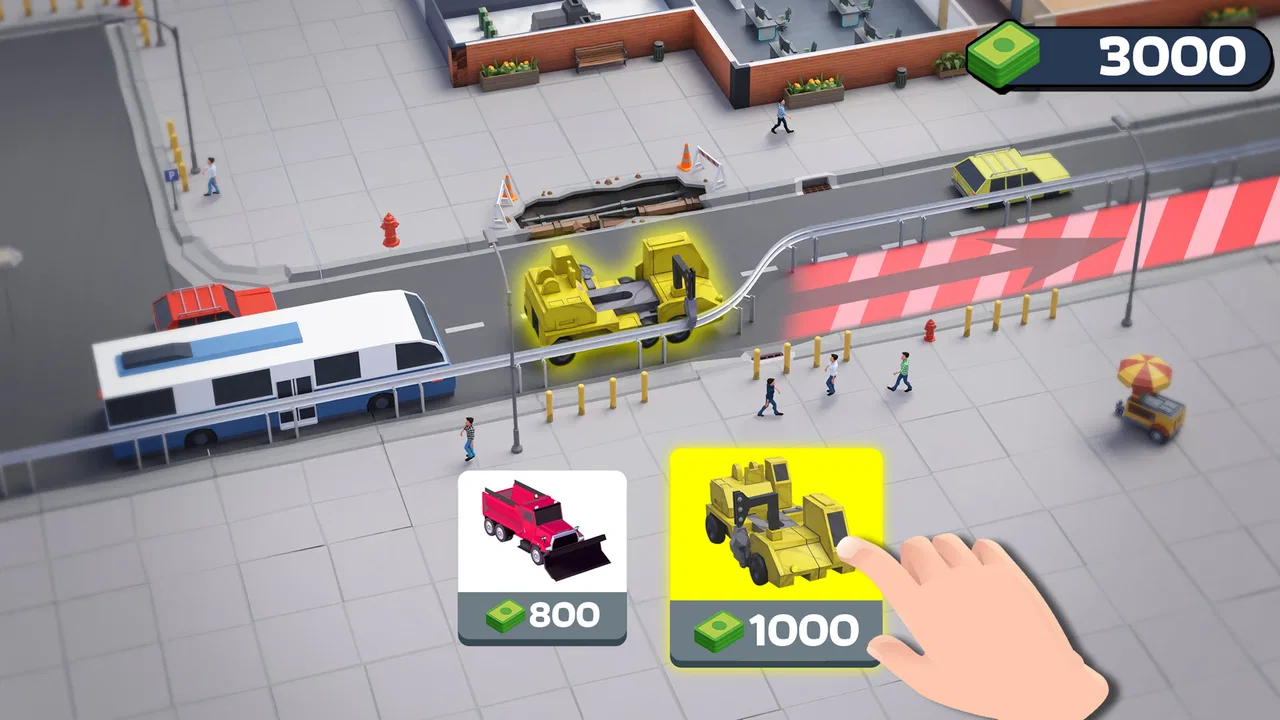
The presentation also helps with orientation. As the office grows, the visual changes make progress easier to read than a number alone would. I can see that my earlier decisions had consequences, which is important in a genre where much of the action happens while the player is away. The visual growth is not just decoration; it gives me a reason to care about the next milestone.
Where the simulation is strongest
The strongest part of the experience is its low-pressure accessibility. Someone unfamiliar with management games can understand the first decisions quickly, while a more experienced idle player can still find room to optimize spending. I like that the game does not ask me to master complicated controls before I can enjoy it. The challenge comes from prioritizing improvements and maintaining a sensible rhythm.
It is also a good fit for players who want a business theme without the intensity of a traditional strategy title. Compared with a detailed tycoon game that expects constant monitoring, this one is more forgiving and more suitable for intermittent play. Compared with a completely passive clicker, it gives my decisions more context because the office itself develops as I invest in it.
That middle ground is important. If I want deep market simulation, employee scheduling, or a complex economic model, this is probably too streamlined. If I want a game that can be checked briefly and still show visible progress, it is much more appealing than a demanding management alternative. The right audience is someone who enjoys making small financial choices repeatedly, not someone looking for a full desktop-style business simulator on a phone.
Settings and habits that make sessions smoother
I recommend checking the available settings before settling into a routine. The first things I look for are sound, music, notification behavior, and any display or account options that affect how comfortable the game is during short sessions. I do not assume that every option improves efficiency; some are simply about reducing distraction. Playing quietly is useful in public, while keeping selected audio on can make the office feel more active during a relaxed session at home.
Notifications deserve a practical decision rather than an automatic yes. If I enjoy returning whenever progress is ready, reminders can support the idle rhythm. If I already have several games competing for attention, turning unnecessary alerts off makes the experience calmer. The best setup depends on whether I want the game to invite me back or remain something I open only when I choose.
I also keep the interface readable and avoid rushing through screens just because a button is highlighted. In management games, a fast tap can be less useful than a careful glance at what the purchase changes. Before confirming a major improvement, I check the surrounding options and consider whether the same money could unlock a more productive section. This habit is simple, but it prevents the common mistake of treating every available purchase as equally valuable.
Another useful routine is to separate “collection sessions” from “planning sessions.” During a collection session, I gather accumulated earnings and make only the upgrades that clearly support my current objective. During a planning session, I take more time to inspect the office and decide what I want the next few visits to accomplish. This keeps me from making expensive choices while distracted and gives the game a clearer structure.
The free entry point is helpful, but I keep the in-app purchase range in mind when deciding how to play. Items can cost from $0.99 to $99.99, so I would not treat every optional purchase as a harmless small convenience. My preferred approach is to enjoy the normal progression first and decide later whether spending genuinely improves my experience. Players who dislike any temptation to accelerate progress should be especially deliberate about their purchase settings and habits.
Faster patterns for steady progress
The most reliable improvement I found was adopting a repeatable order of operations. I collect accumulated money, identify the next meaningful bottleneck, buy the improvement that addresses it, and then stop spending once my reserve reaches a useful level. This is faster than making purchases based on whichever icon happens to attract attention. It also makes each return feel purposeful.
I avoid upgrading purely for visual satisfaction when a functional improvement is available. The office may look more impressive after a particular purchase, but appearance alone does not necessarily move the business forward. My rule is to ask what the upgrade changes in the next cycle. If the answer is unclear, I wait until I can compare it with another option instead of spending immediately.
A second pattern is to use short sessions for maintenance and longer sessions for expansion. In a short visit, I collect earnings and handle one or two obvious improvements. In a longer visit, I examine the whole development path and decide which area deserves priority. This prevents the game from becoming a frantic shopping list and gives me better control over the pace of growth.
I also find it useful to set a personal stopping point. Once I have made the key purchase for that session, I close the game rather than continuing to tap without a clear goal. Because the game is idle-oriented, leaving at the right moment is part of the strategy, not a failure to keep playing. The next return then has a clear purpose: check the result of the previous decision and continue from there.
Players who are tempted by speed-focused purchases may want to compare the time saved with the enjoyment lost. Accelerating every stage can remove the small decisions that make the simulation satisfying. On the other hand, a carefully chosen purchase may be reasonable for someone who has limited playtime and values convenience more than slow progression. I would treat spending as a preference choice, not as a requirement for understanding the game.
One non-obvious strength is that the idle format encourages consistency rather than marathon play. I get better results from returning at a regular personal rhythm than from opening the game repeatedly without a plan. The office becomes a background project, and that makes it easier to enjoy alongside other mobile games instead of letting it take over my attention.
Limits that become clearer later
The same simplicity that makes the game welcoming can also become a limitation. Once I understand the main loop, some sessions begin to feel predictable: collect, upgrade, wait, and repeat. The visual growth provides motivation, but players who need constant surprises or highly varied missions may eventually find the routine too narrow.
There is also a ceiling to how deeply the business simulation feels. I am making meaningful spending choices, but I am not managing every detail of a real company. Someone looking for employee personalities, complicated contracts, market shocks, or detailed financial reporting would probably be happier with a more demanding tycoon game. This title focuses on accessible progression rather than realism.
The idle structure can create a strange balance between involvement and passivity. I have decisions to make, but much of the progress happens while I am away. That is relaxing when I want a low-effort game, yet it can feel underwhelming when I am in the mood for active play. I would skip it on an evening when I want constant interaction, tactical battles, or a story that advances through direct control.
Monetization is another point to consider honestly. The game is free to start, but the listed in-app purchase range reaches $99.99 per item. That does not make the game unusable, but it means I would recommend playing with a clear spending boundary. The experience is best when optional purchases remain optional in the player’s mind. Anyone uncomfortable with large purchase choices should approach carefully and avoid treating faster progress as necessary.
Performance expectations should also be realistic. The minimum Android requirement is version 7.0, which makes the game accessible to many older devices, but the experience can still depend on the phone, background activity, and how smoothly the device handles a growing simulation. I would keep the game updated to its current version, 3.2.9, and use the settings to make sessions comfortable rather than assuming every phone will feel identical.
Who should install it, and who should pass
I would recommend this game to someone who likes watching a small operation become more ambitious over time. It is particularly suitable for players who enjoy brief check-ins, visible upgrades, and light financial planning without the pressure of a competitive strategy game. The Everyone rating also makes its general presentation approachable for a broad audience.
It is less suitable for a player who wants a realistic property simulator, a rich narrative, or a game that rewards rapid manual skill. It is also not my first choice for someone who dislikes idle mechanics on principle. If the idea of waiting for progress feels boring rather than satisfying, the office theme will not solve that problem.
Compared with ordinary idle clickers, this game gives progression a more concrete setting. I am not only watching a number rise; I am developing an office and thinking about the next stage of the business. Compared with full tycoon alternatives, however, it sacrifices depth for convenience. That trade-off is deliberate, and I think it works as long as expectations are set correctly.
My verdict after settling into the routine
Idle Office Tycoon - Money game succeeds because it makes gradual management easy to fit into daily life. I can play for a few minutes, make a sensible investment, and leave with the feeling that the office is still moving forward. The best results come from restraint: checking the next goal, protecting a reserve, and resisting the urge to buy every available improvement immediately.
Its average rating of 4.7 from around 341 thousand ratings reflects the broad appeal of that formula, while roughly five thousand written reviews show that many players have taken the time to discuss their experience. Those figures do not change my personal conclusion, but they do match what I felt while playing: this is a polished, approachable idle simulation with a clear audience rather than a deep business sandbox.
My final advice is to try it as a background management game, not as a replacement for a serious tycoon simulator. Keep sessions short when you have no clear goal, use settings that prevent unwanted interruptions, and decide in advance whether optional purchases fit your budget. If you enjoy building progress through repeatable habits, it is an easy recommendation. If you need constant action or complex economic control, choose a more involved alternative instead.
FAQs for Idle Office Tycoon- Money game
01What is Idle Office Tycoon- Money, and how does the gameplay work?
Idle Office Tycoon- Money is a business simulation game in which you develop and manage an office company. You begin with a modest workplace, hire employees, upgrade facilities, and gradually unlock more profitable departments and locations. The idle system allows your business to continue generating income while you are away, although returning regularly to collect earnings and make upgrades helps you progress faster.
02Does Idle Office Tycoon- Money require an internet connection?
The game may allow some basic features to work without a constant connection, but an internet connection is generally recommended for the complete experience. Online access can be needed for advertisements, cloud-related features, event content, rewards, and certain updates. Availability may vary by device and version, so players should not assume that every feature will work offline.
03Is Idle Office Tycoon- Money free to download and play?
Idle Office Tycoon- Money is typically available as a free-to-download game, but it may include optional in-app purchases and advertisements. Players can usually progress without spending money, though purchases may provide extra resources, remove some waiting time, or offer special benefits. Before downloading, review the store listing and device payment settings, especially if children may access the game.
04Are advertisements necessary to make progress in the game?
Advertisements are commonly integrated into idle management games as optional ways to receive bonuses, speed up production, collect additional income, or claim special rewards. You can generally continue playing without watching every advertisement, but choosing to view them may accelerate development. The frequency and rewards can change after updates, so the experience may differ between versions or regions.
05What devices are compatible with Idle Office Tycoon- Money?
Compatibility depends on the operating system, device model, available storage, and the minimum requirements listed on the official Google Play or Apple App Store page. The game is designed for Android and iOS users, but older phones may experience slower loading, reduced performance, or installation restrictions. Checking the current store requirements before downloading is the safest way to confirm compatibility.
Pros
- Simple idle mechanics make it easy to play in short sessions.
- Frequent upgrades provide a steady sense of progress.
- Office customization adds a personal touch to your business.
- Lighthearted visuals and animations keep the presentation engaging.
- Works well for players who enjoy management games without high pressure.
Cons
- Progress can slow considerably without spending premium currency.
- Repeated tasks may feel monotonous after extended play.
- Some rewards and upgrades are tied to watching advertisements.
- The game may encourage frequent check-ins to maximize earnings.
- Limited strategic depth may disappoint experienced tycoon players.

Idle Office Tycoon- Money game
Gallery